 Book a call →
made with germany
“Made in Germany” is still the most trusted origin label in the world. That is exactly the danger: resting on a promise people have long since started reading differently.
the crack beneath the surface
the starting pointSome brands radiate far beyond their country of origin. “Made in Germany” was exactly that for decades — three syllables that vouched for precision worldwide.
The good news first: the promise still works. A spring 2025 survey by the Nuremberg Institute for Market Decisions puts “Made in Germany” top of the world's most trusted origin labels with 66 per cent approval — ahead of Japan, ahead of Switzerland. YouGov confirms it too: 83 per cent of international respondents place trust in German products.
But a crack is working away beneath that stable surface. Trust is crumbling — most clearly where you would least expect it: at home. According to YouGov, strong German trust in German products fell from 64 to 54 per cent within three years. A tenth lost, in the core audience. That is not an accident. That is a signal.
from stamp to story
a shift in meaningFor decades the label was a straightforward guarantee: if you wanted quality, you reached for German brands without hesitating. Today the lines are blurring. Many products sold as “Made in Germany” are long since not manufactured exclusively there. Components come from Asia, software from the US, final assembly happens in Germany — and the seal goes on regardless.
Which raises an uncomfortable question: what does “Made in Germany” actually still mean? A real promise of quality — or a marketing term people cling to? Consumers have become more critical. They no longer only want to know where a product was made but how — under what conditions, with what raw materials, according to what values.
The new generation no longer asks “does it work perfectly?” but “does it fit my values?”
That puts the old equation out of action. Precision and high technology alone are no longer enough. Where do the raw materials come from? How sustainable is production? Under what conditions do the people behind it work? Quality has become the entry ticket, not the winning ticket.
origin becomes attitude
three pillars“Made with Germany” shifts the focus from the place to the manner: no longer only where something is made, but how, with whom and by what values.
Collaboration instead of isolation
Products are created in global networks today. German engineering combines with international ideas rather than barricading itself behind national borders. The “with” is not a concession but a strength — an acknowledgement that the best solutions come out of working together.
Transparency instead of platitude
Companies have to disclose where their materials come from and what their production really looks like. Greenwashing is exposed immediately — a generation that researches before buying does not forgive the gap between claim and conduct.
Responsibility instead of excellence alone
Origin is no longer only a quality marker but a question of social and ecological stance. A good product today also has to convince ethically — otherwise it loses exactly the people who would once have bought it blind.
brands already living it
in practiceThis is not theory. Several German brands already show what “Made with Germany” looks like in practice — and an honest look serves better than the glossy brochure.
Adidas
Sustainability as a materials strategy: most recently 99 per cent of the polyester processed came from recycled material — a remarkable figure for a group of this size. Telling, though, that the once-celebrated “Ocean Plastic” collaboration with Parley ended in 2024. That is precisely the lesson: responsibility is not a one-off lighthouse project for the marketing department but a task that has to keep evolving.
Porsche
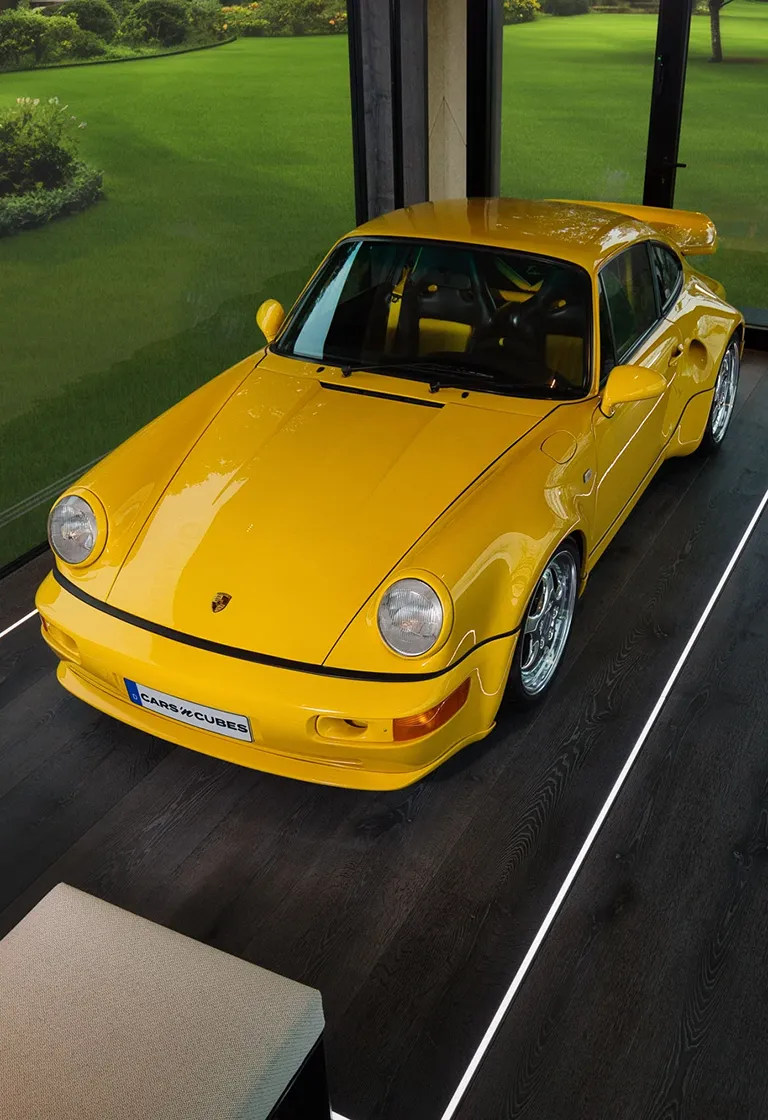
Proof that luxury and future viability are not mutually exclusive. With electrification — from the Taycan through to the core model lines — and digital services, the brand is taking new routes without betraying its core.
Miele
Against the trend towards short lifespans, it holds to a clear philosophy: appliances that not only work perfectly but last and can be repaired. A commitment that reaches beyond any campaign — because the most sustainable product is the one you never have to replace.
The shift from “Made in Germany” to “Made with Germany” is not a loss. It is an invitation to renew the promise rather than merely administer it.
from origin to attitude
takeawayPut the pieces together and a clear picture emerges. The shift means three things: from perfection to real responsibility — it is no longer only about fault-free products but about a positive effect on environment and society. From tradition to innovation — instead of relying on old successes, the job is to take new routes: digital, sustainable, connected. And from origin to attitude — people no longer buy just a product, they buy a brand that reflects their values.
That is the real opportunity inside the crumbling trust figures. A seal that is merely administered loses. A seal that is actively thought forward gains new relevance. A German brand that shows attitude now — transparent, responsible, collaborative — turns an endangered inheritance into a promise with a future. Because in the end what counts is no longer only where something comes from, but what it stands for.
Sources
- 01Nuremberg Institute for Market Decisions (NIM), March 2025: international trust comparison of “made in” labels — Germany in first place with 66 %.
- 02YouGov (2024): “Made in Germany — still a global seal of quality” — 83 % international trust; domestic trust down from 64 % (2021) to 54 % (2024).
- 03Visual Capitalist (2026): “Ranked: The Most Trusted Made-in Labels in the World” — analysis of the NIM survey, 10 countries, 20,000 respondents.
- 04Statista / Dalia Research: “Made-in-Country Index” — Germany as the leading origin label, reputation compared across more than 50 nations.
- 05shoez.biz / Dazed (2024): the end of the Adidas–Parley collaboration; most recently 99 % recycled polyester in the material mix.
- 06Porsche: electrification strategy (Taycan and core model lines), digital services as evidence of innovation.
- 07Miele: company philosophy of longevity and repairability as a sustainability commitment.
make your attitude visible?
Brand work at its best means not asserting your origin but showing your attitude. Let's talk about it.